Project Overview:
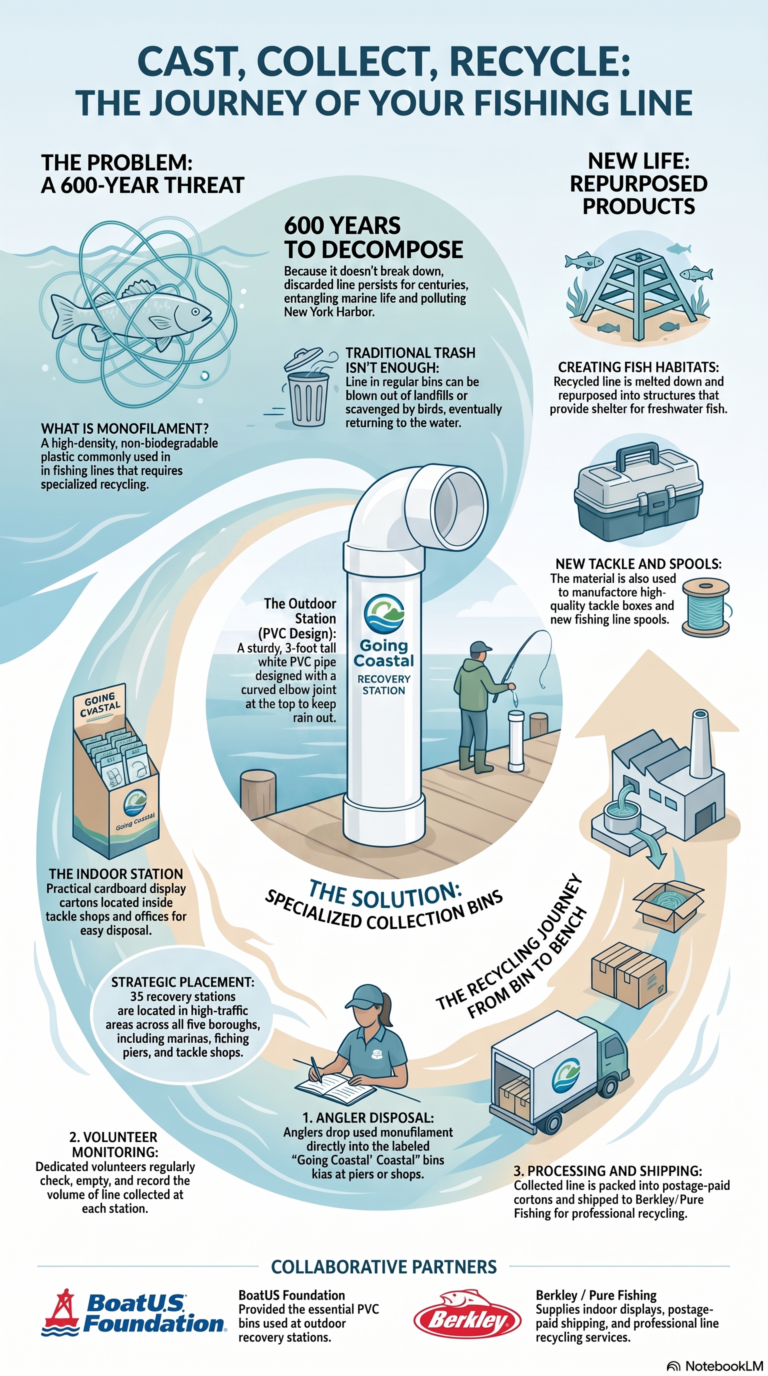
Going Coastal is the pioneer of New York City’s groundbreaking monofilament fishing line recycling initiatives, taking a stand against a persistent form of marine pollution. Monofilament is a high-density plastic that is non-biodegradable and can persist in the marine environment for up to 600 years. To combat this, Going Coastal established an extensive network of 35 recovery stations across marinas, fishing piers, and tackle shops in every borough. These stations consist of sturdy outdoor PVC plastic tubes and practical indoor cardboard display cartons where anglers can effortlessly drop their used line.
The project ensures that the lifecycle of the fishing line does not end at the bin; through a partnership with Pure Fishing America (Berkley), the collected material is meticulously ground, melted, and repurposed into high-quality products such as fishing line spools, tackle boxes, and specialized habitats for freshwater fish. While the initial grant-funded phase has concluded, the program remains active through a dedicated volunteer network that monitors collection bins to track the program’s impact and ensure New York Harbor remains a beautiful and safe resource for future generations.
Project Objectives:
- Reduce marine debris in New York City’s shorelines and waterways.
- Protect wildlife, boaters, and pedestrians from the hazards of line entanglement.
- Divert non-biodegradable plastic from landfills where it can be dispersed by wind or animals.
- Promote responsible fishing and environmental stewardship among local angler.
Partners:
- National Fish and Wildlife Foundation
- BoatUS Foundation
- Pure Fishing
- America Berkley
- NYC Dept. of Parks & Recreation
Outcomes:
- 35 Monofilament Recovery Stations (Outdoor PVC tubes and indoor cardboard displays)
- Project Outreach Video (YouTube)
- Postage-paid shipping and recycling system
Project Dates: Launched 2011 – 2017